I am very happy to officially share a resource that has been close to my heart and deeply connected to my doctoral research: the booklet “MANEJO DEL FUEGO COMUNITARIO PARA REDUCCIÓN DE LOS INCENDIOS FORESTALES.”
This booklet was made possible thanks to the support of the Mountain Sentinels and was developed in close collaboration with the local organization CEDES Apurímac, led by my co-author Augusto Ramirez. At its core, this manual is dedicated to campesinos and campesinas in the Peruvian Andes. It builds directly on their own experiences and knowledge.
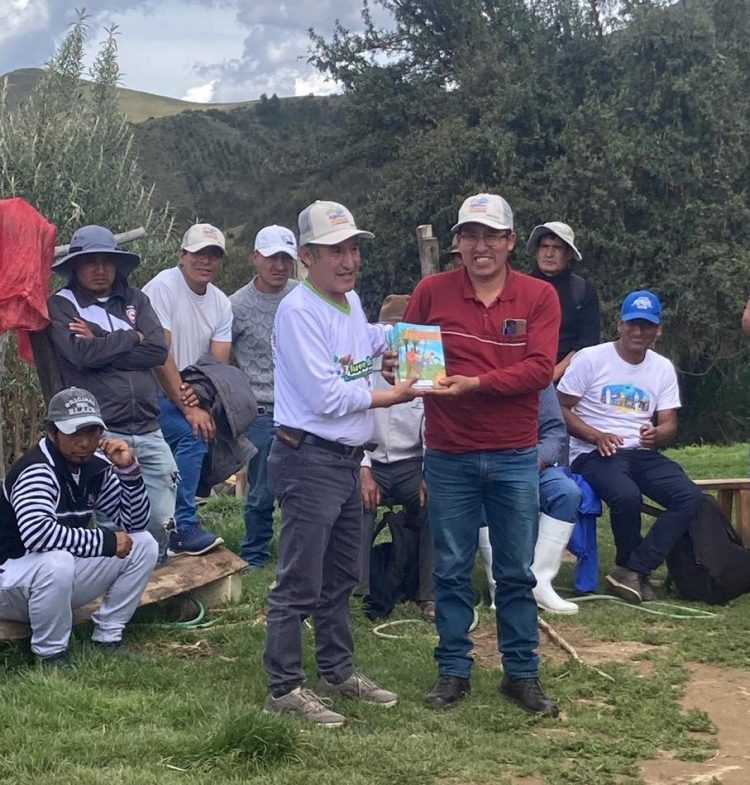
📸 Photo: Augusto Ramírez sharing the booklet with a campesino in Curahuasi, Peru
“Este manual ha sido preparado para ustedes… En nuestras comunidades andinas, el fuego siempre ha sido parte de la vida: sirve para limpiar la chacra, cocinar y renovar pastos. Pero cuando se usa mal, puede volverse un peligro…”
Fire, in Quechua communities, is far more than a tool. It is tradition, knowledge, and necessity. It is used to clear crop residues, manage vegetation, and prepare fields—especially during the dry season.
Over three years of fieldwork, I had the privilege of learning alongside farmers through interviews, participant observation, and workshops. What became clear is that these communities hold a sophisticated understanding of fire behavior. They read the landscape—topography, fuels, and weather—with a precision that often mirrors what is described in Western prescribed burning science.
While escaped fires do occur, they are typically contained quickly—often within an hour—by farmers themselves. At the same time, many communities are already adapting their practices in response to increasing flammability, shifting climate conditions, and more restrictive fire policies. These adaptations reflect deep local expertise.
Yet, this burden of adaptation should not fall solely on local communities. There is an urgent need for fire governance systems that recognize and support—rather than criminalize—Indigenous and local fire knowledge. Building collaborative relationships between farmers, firefighters, NGOs, and researchers is essential. Together, we can move beyond approaches that rely only on suppression, toward more context-sensitive and effective fire management strategies.
This booklet is a small contribution toward that vision: a practical, accessible guide grounded in lived experience and collective knowledge, aimed at strengthening community-based fire management and reducing wildfire risks.
I hope this resource can support ongoing conversations and actions toward more just, inclusive, and effective fire management in mountain landscapes.
 Vanessa Luna-Celino