My doctoral research and practitioner work focuses on community-based fire management and stakeholders’ perceptions of fire governance in Peru, my home country. My research advances our understanding of the human-fire relationship by bringing theoretical and methodological approaches from multiple disciplines (ecology, geography, political sciences, and anthropology). Research and practitioner work on these issues, which are unique for the country, expect to contribute to policy-making through crucial scholarship and collaborative activities with local partners. In my last in the Ph.D. program, I have been working on results dissemination by elaborating peer-reviewed scientific papers and science communication efforts. The latter included the filming of a short documentary about my research (see below), and participatory workshops and symposia in November 2023. These efforts were possible thanks to the SNRE’s Robin E. Nadeau Ecology Graduate Research Award.
Research context and motivation:
Fire is an essential tool in tropical subsistence agriculture and is a traditional, intergenerational, and cash-free way of releasing nutrients, controlling pests and weeds, and preparing new farmland. However, agricultural burns and other ignition sources have increasingly affected fire regimes -frequency, intensity, severity, and seasonality- in most tropical ecosystems. Some agricultural burns result in accidental or escaped fires, where secondary outbreaks unintentionally affect surrounding areas, especially when strong winds are combined with droughts. Concurrent changes in global and regional climate also accentuate the increase in fire frequency.
Globally, societies have responded to escaped fire threats with some degree of fire suppression and prevention strategies. More recently, there has been a call for new practices and paradigms on fire management: a call that incorporates traditional ecological knowledge from indigenous and local peoples, avoids the overcriminalization of fire-related practices, and promotes bottom-up fire management. Fire governance involves decision-makers engaging with key actors to determine fire’s social and ecological role and how to manage fire. Understanding key actors’ perceptions is the first step in fire governance and can be applied to understand policy context, facilitate communication and transparent decision-making, and manage conflicts.
Specifically, the Peruvian Andes has a long history of anthropogenic fires, which have shaped the natural landscape over millennia. Here, too, fire is an important agricultural tool in local communities and the most affordable way to open farmlands and control undesirable vegetation and pests. However, as in many other tropical countries, agricultural burns are prohibited and are a significant problem when not adequately controlled. There are also interesting examples of local communities self-organizing and adapting their fire-related practices to get the most benefit from their burns and reduce wildfire risk. Yet, bottom-up fire management initiatives require the recognition of multiple actors involved in decision-making on fire-related policies.
Science communication for environmental policy change:
For the dissemination and validation phase of my doctoral project, I organized and facilitated two workshops and two symposia. In collaboration with a local nonprofit organization, CEDES Apurimac, the organization of two workshops on ‘Locally-based fire management in the Peruvian Andes,’ targeted local stakeholders representing the regional and local government, nonprofit organizations, volunteer firefighters, local communities, and researchers, many of whom participated in previous phases of my doctoral research. One workshop was held in Kiuñalla campesino community and another in Abancay City.
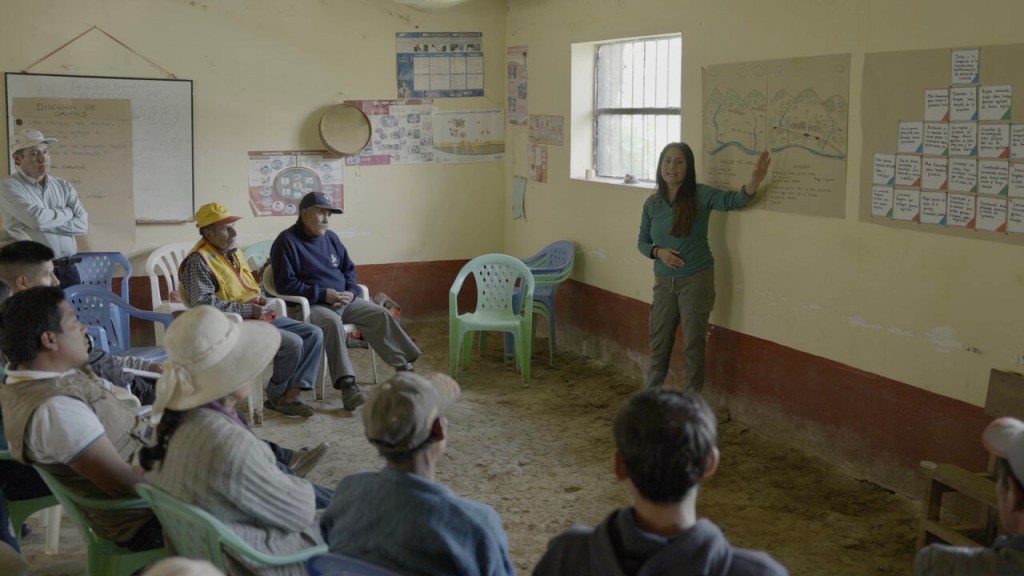
Having my doctoral results as a starting point of discussion, participants discussed what actions were needed to promote effective fire governance in the Peruvian Andes. Overall, these workshops promoted the reflection on various current and potential fire management strategies, such as community brigades, law enforcement, fire awareness campaigns, safe agricultural burns, and landscape management.

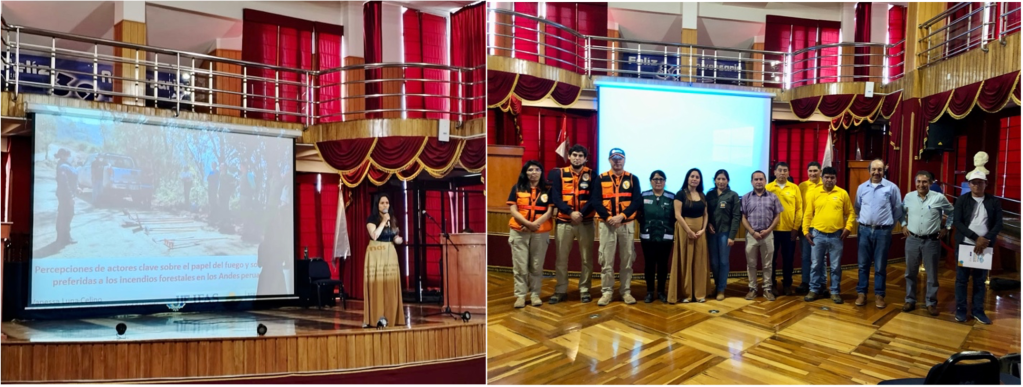
The two symposia targeted ~250 undergraduate students from local universities in the regions where my research was conducted and aimed to promote the dialogue on fire management in Peru. In Abancay City, the symposium ‘Prevention and control of wildfires from rural communities’ brought together representatives of government, non-profit organizations, and campesino communities to discuss farmers’ efforts in community-based fire management. In Cusco city, the symposium ‘Research on wildfires and local prevention efforts,’ brought together fire researchers and regional practitioners with the aim to promote more wildfire research and innovative fire-related actions in Peru. Both symposia were free of charge for any attendee.
Final reflections:
Wildfires are an issue increasingly affecting every corner of the world. The focus of my research and practitioner efforts in fire governance and management is intentionally geared toward aiding decision-making through an integrated and adaptive approach to fire management. This stands in contrast to the prevailing emphasis on wildfire suppression and prevention strategies currently implemented in Peru. My main goal as a doctoral student has been to promote the bridge between research and action through science communication and spaces of social learning on effective fire-related practices and policies.
 Vanessa Luna-Celino